Submission Guidelines
Prospective authors are invited to submit full-length paper, 8 pages maximum, for both oral and poster presentations.
This year DAFx reviews will be double-blind. For the initial submission, please make sure to remove all identifying information (e.g., author names, affiliations, etc) from your paper and any supplemental material. LaTeX submission can be anonymized by enabling the blind option in the template.
Preprints:
We discourage authors from posting preprints (i.e., on arXiv), as there is a likelihood that reviewers will run across the paper online. If you do post a preprint, please clearly identify it as a non-peer-reviewed, non-accepted document.
The program committee will decide the types of presentation format based on the conference organization and the authors' preferences.
Submitted papers must be camera-ready and conform to the format specified in the template, which can be downloaded below and submitted through the EasyChair conference management system.
Please make sure to use the new version of the LaTeX template (UPDATED March 23, 2026: DAFx26_LaTex_v3.zip and dafx26v3). All submissions must be original and will be subject to peer review. Word templates are available by request.
Authors:
Submitted papers must not have been previously published, nor under review elsewhere.
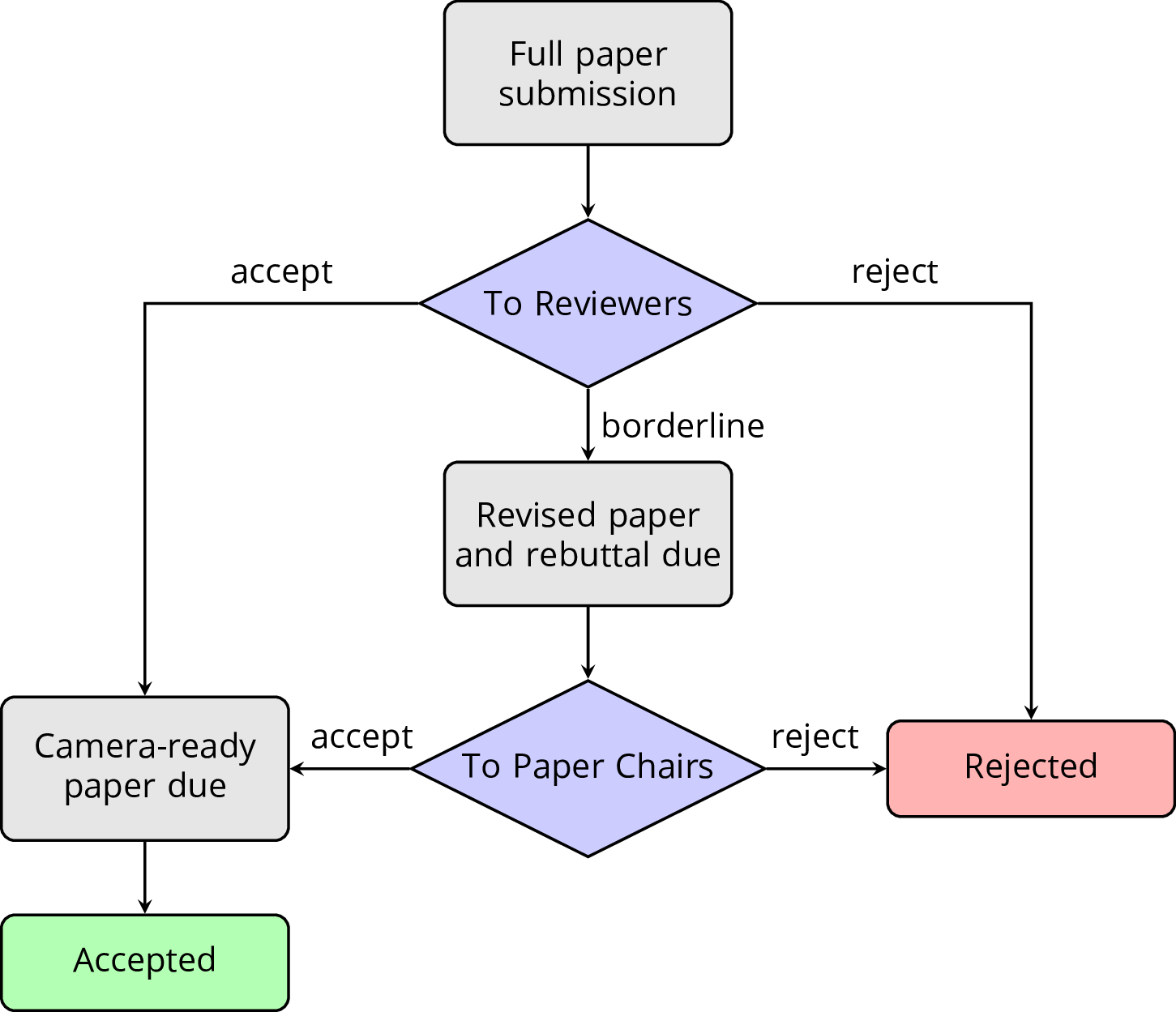
Acceptance may be conditional upon changes being made to the paper as specified by reviewers (please read about the 1+1/2 peer-reviewing system below).
Final versions of the accepted contributions will be published in the conference proceedings distributed to all registered delegates and will be made freely available.
Presenting Authors:
At least one author from each paper must register for the conference to present their research paper.