Go With The Flow: A Creative Approach to Algorithmic Reverb Design
Sean Costello, Valhalla DSP
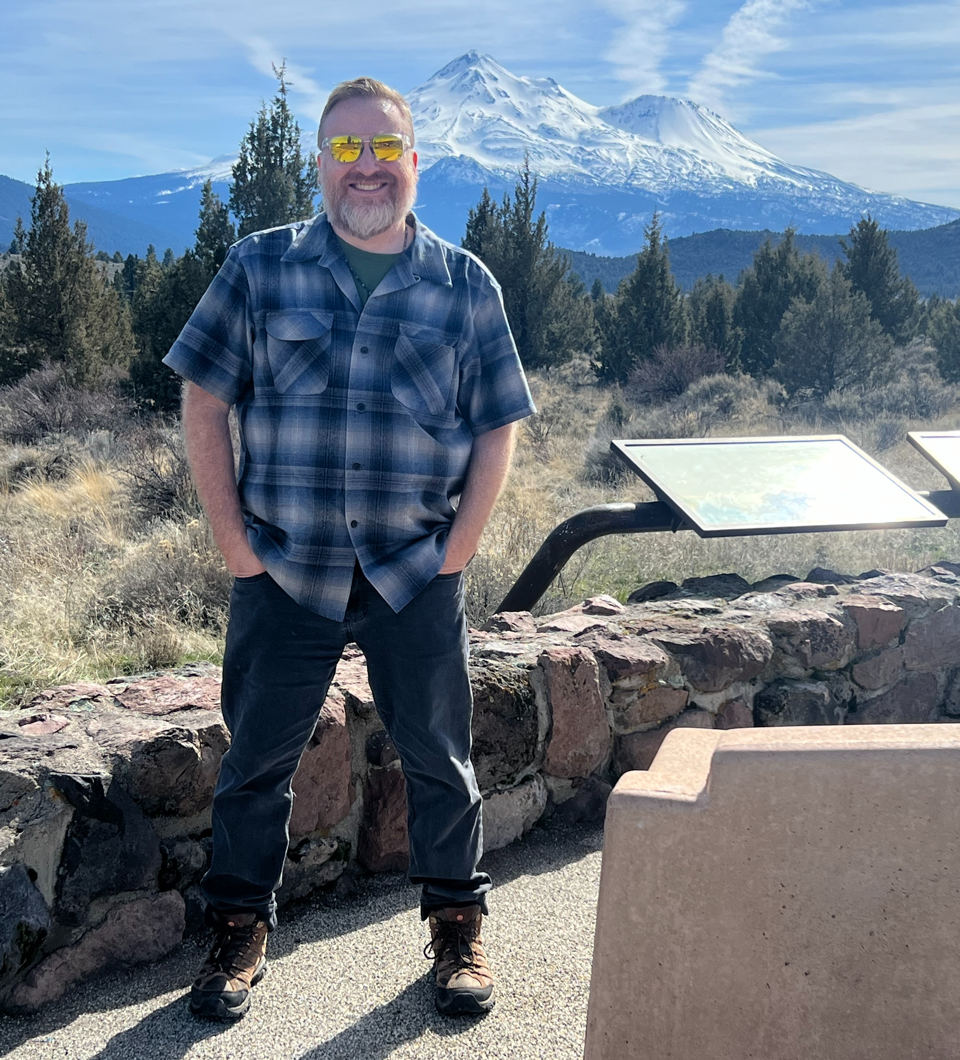
Algorithmic reverbs can take on a vast variety of forms, but are usually made from a relatively small set of DSP functions. I'll introduce the basic building blocks of reverb design, and explain a few simple yet powerful design rules. We'll be taking a tour of algorithmic reverb topologies, from the early work of Schroeder, through the innovations of digital hardware and software reverberators in the 1970s and 80s, and on to the FDN work of Gerzon, Jot and Puckette. I'll be discussing some of my own reverb work, and demonstrate how the simple building blocks and design rules can be almost infinitely extended. The emphasis will be on tapping into creativity to create new reverb structures: try everything, read everything you can on the subject, avoid the pitfalls of perfectionism, appreciating failure as a necessary step towards success, and the importance of being authentic to your own true nature.
Sean Costello has been designing reverb algorithms for over 26 years. Sean and his wife, Kristin, co-founded Valhalla DSP in 2007, with the goal of creating affordable, accessible, and inspiring plugins with minimalist GUIs. Sean has a BA in Anthropology from Stanford University, studied computer music at the University of Washington, and spent a few weeks learning about plugins at the Banff Arts Center in 2004, which he cannot recommend highly enough if you get the chance. He worked at Staccato Systems from 1999 through 2001, learning a great deal about sound synthesis and DSP, and programming physically modeled engine sounds for games that no one bought. From 2001 through 2006, Sean worked at Analog Devices, developing audio algorithms and DSP blocks for SHARC and Blackfin processors.
Algorithmic reverbs can take on a vast variety of forms, but are usually made from a relatively small set of DSP functions. I'll introduce the basic building blocks of reverb design, and explain a few simple yet powerful design rules. We'll be taking a tour of algorithmic reverb topologies, from the early work of Schroeder, through the innovations of digital hardware and software reverberators in the 1970s and 80s, and on to the FDN work of Gerzon, Jot and Puckette. I'll be discussing some of my own reverb work, and demonstrate how the simple building blocks and design rules can be almost infinitely extended. The emphasis will be on tapping into creativity to create new reverb structures: try everything, read everything you can on the subject, avoid the pitfalls of perfectionism, appreciating failure as a necessary step towards success, and the importance of being authentic to your own true nature.
Sean Costello has been designing reverb algorithms for over 26 years. Sean and his wife, Kristin, co-founded Valhalla DSP in 2007, with the goal of creating affordable, accessible, and inspiring plugins with minimalist GUIs. Sean has a BA in Anthropology from Stanford University, studied computer music at the University of Washington, and spent a few weeks learning about plugins at the Banff Arts Center in 2004, which he cannot recommend highly enough if you get the chance. He worked at Staccato Systems from 1999 through 2001, learning a great deal about sound synthesis and DSP, and programming physically modeled engine sounds for games that no one bought. From 2001 through 2006, Sean worked at Analog Devices, developing audio algorithms and DSP blocks for SHARC and Blackfin processors.

Spectrogram-Based Audio Processing and Restoration: From Multiband Gates to Machine Learning
Alexey Lukin, iZotope Inc.
Spectral analysis and frequency-based processing sit at the core of many modern audio algorithms. This talk revisits the psychoacoustic foundations of frequency decomposition and examines how to choose an appropriate FFT size and weighting window for different tasks. We will trace the evolution of spectrogram-based audio editing and restoration tools - from early multiband gates and spectral-subtraction methods to contemporary machine-learning (“AI”) approaches. The session will conclude with a demonstration of the machine-learning techniques behind iZotope's Dialogue Isolate model.
Alexey Lukin is a Principal Research Engineer at iZotope Inc., a Boston-based audio technology company known for products such as Ozone and RX. Often regarded as a leading architect of RX, he has been developing its signal-processing algorithms since 2003. He holds a Ph.D. in computer science from Moscow State University, and his research interests span spectral analysis, noise reduction, audio measurement, and intersections between image and audio processing. Alexey has authored more than 40 papers and holds eight patents. His work on RX has earned him a Scientific & Engineering Award from the Academy of Motion Picture Arts and Sciences and two Engineering Emmy Awards.
Spectral analysis and frequency-based processing sit at the core of many modern audio algorithms. This talk revisits the psychoacoustic foundations of frequency decomposition and examines how to choose an appropriate FFT size and weighting window for different tasks. We will trace the evolution of spectrogram-based audio editing and restoration tools - from early multiband gates and spectral-subtraction methods to contemporary machine-learning (“AI”) approaches. The session will conclude with a demonstration of the machine-learning techniques behind iZotope's Dialogue Isolate model.
Alexey Lukin is a Principal Research Engineer at iZotope Inc., a Boston-based audio technology company known for products such as Ozone and RX. Often regarded as a leading architect of RX, he has been developing its signal-processing algorithms since 2003. He holds a Ph.D. in computer science from Moscow State University, and his research interests span spectral analysis, noise reduction, audio measurement, and intersections between image and audio processing. Alexey has authored more than 40 papers and holds eight patents. His work on RX has earned him a Scientific & Engineering Award from the Academy of Motion Picture Arts and Sciences and two Engineering Emmy Awards.
The Colors We Feel, the Shapes We Hear, the Sounds We See: Lessons from ARP Instruments and how the company helped electronic music create a new Experiential Lexicon
Dina Pearlman-Ifil (d'ARP), Alan R. Pearlman Foundation
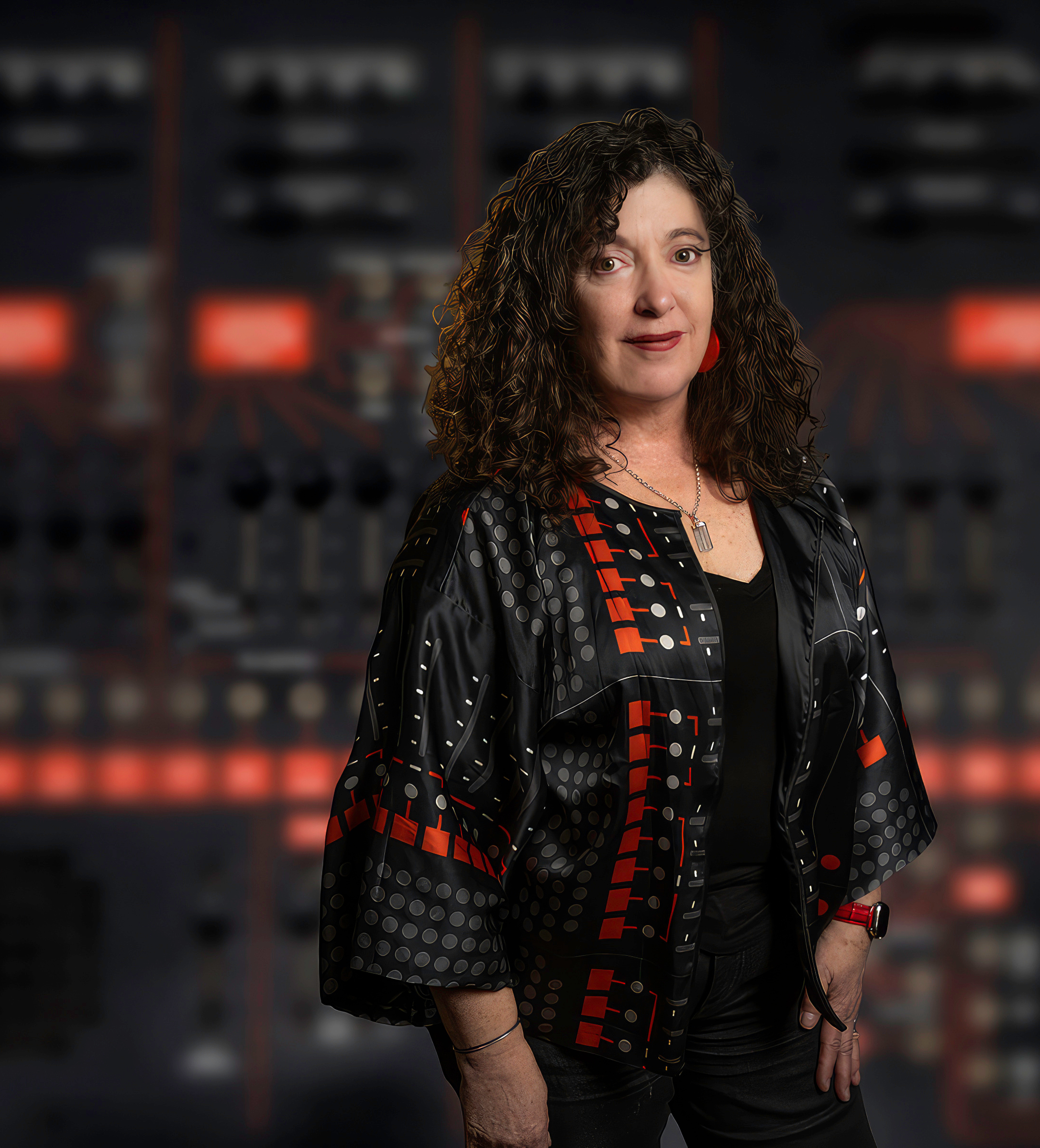
Electronic Musical instruments hold a unique place in the evolution of creative expression. Combining components often considered cold and mechanical with the purpose of creating aural aesthetics has frequently been controversial. The word “synthetic,” murmured in the same breath as “music,” was often sneered at and relegated to novelty. When utilizing these instruments, and when experiencing the sounds as an audience member (or potential customer), manufacturers sought to integrate different techniques—from marketing to interface construction—that often conflicted: sound waves, abstractions and /or musicians playing the instruments. The result has over time, created a visual language that, to pro-audio and musical professionals alike are now part of the common lexicon.
The talk will begin by taking you on a journey of electronic music imagery, citing ARP Synthesizers and their unique “human design” and marketing concepts as well as other examples dating back from the beginning of the 20th Century to today. As we delve deeper, I hope to illustrate that electronic music has evolved into a multi-sensory experience—an infinite variety of sensory possibilities including the visual and tactile, that can truly be thought of as inclusive—blurring the lines regarding the age-old question: which comes first: form or function?
Dina Pearlman-Ifil (d'ARP) is the only child of Alan and Buena Pearlman and grew up with ARP Synthesizers as a backdrop for her childhood, traveling extensively and being exposed to innovative and cutting edge technology. In her early years she spent time playing in rock and roll bands, as well as dance and theater. For the past thirty years she has worked as a versatile visual arts and design professional, creative director, and educator. She has also worked extensively in photography, graphic and web design for several decades, and has a broad understanding of visual communications media. Currently she is working on a line of wearable art, including a line of synth-and-sound clothing called The Geek Boutique
In the last few years before his illness, Alan Pearlman started to re-examine the brave new world of synthesizers that exists today, many decades after his iconic and groundbreaking 12 years as the inventor and founder of ARP Synthesizers. During this time, he brought his daughter into the conversation. After his death in January 2019, Dina realized that the need of keeping his legacy and passion alive, and with the help and encouragement of many of his former colleagues as well as the wonderful Michelle Moog-Koussa, she started the Alan R. Pearlman Foundation and ARP Archives.
Electronic Musical instruments hold a unique place in the evolution of creative expression. Combining components often considered cold and mechanical with the purpose of creating aural aesthetics has frequently been controversial. The word “synthetic,” murmured in the same breath as “music,” was often sneered at and relegated to novelty. When utilizing these instruments, and when experiencing the sounds as an audience member (or potential customer), manufacturers sought to integrate different techniques—from marketing to interface construction—that often conflicted: sound waves, abstractions and /or musicians playing the instruments. The result has over time, created a visual language that, to pro-audio and musical professionals alike are now part of the common lexicon.
The talk will begin by taking you on a journey of electronic music imagery, citing ARP Synthesizers and their unique “human design” and marketing concepts as well as other examples dating back from the beginning of the 20th Century to today. As we delve deeper, I hope to illustrate that electronic music has evolved into a multi-sensory experience—an infinite variety of sensory possibilities including the visual and tactile, that can truly be thought of as inclusive—blurring the lines regarding the age-old question: which comes first: form or function?
Dina Pearlman-Ifil (d'ARP) is the only child of Alan and Buena Pearlman and grew up with ARP Synthesizers as a backdrop for her childhood, traveling extensively and being exposed to innovative and cutting edge technology. In her early years she spent time playing in rock and roll bands, as well as dance and theater. For the past thirty years she has worked as a versatile visual arts and design professional, creative director, and educator. She has also worked extensively in photography, graphic and web design for several decades, and has a broad understanding of visual communications media. Currently she is working on a line of wearable art, including a line of synth-and-sound clothing called The Geek Boutique
In the last few years before his illness, Alan Pearlman started to re-examine the brave new world of synthesizers that exists today, many decades after his iconic and groundbreaking 12 years as the inventor and founder of ARP Synthesizers. During this time, he brought his daughter into the conversation. After his death in January 2019, Dina realized that the need of keeping his legacy and passion alive, and with the help and encouragement of many of his former colleagues as well as the wonderful Michelle Moog-Koussa, she started the Alan R. Pearlman Foundation and ARP Archives.